
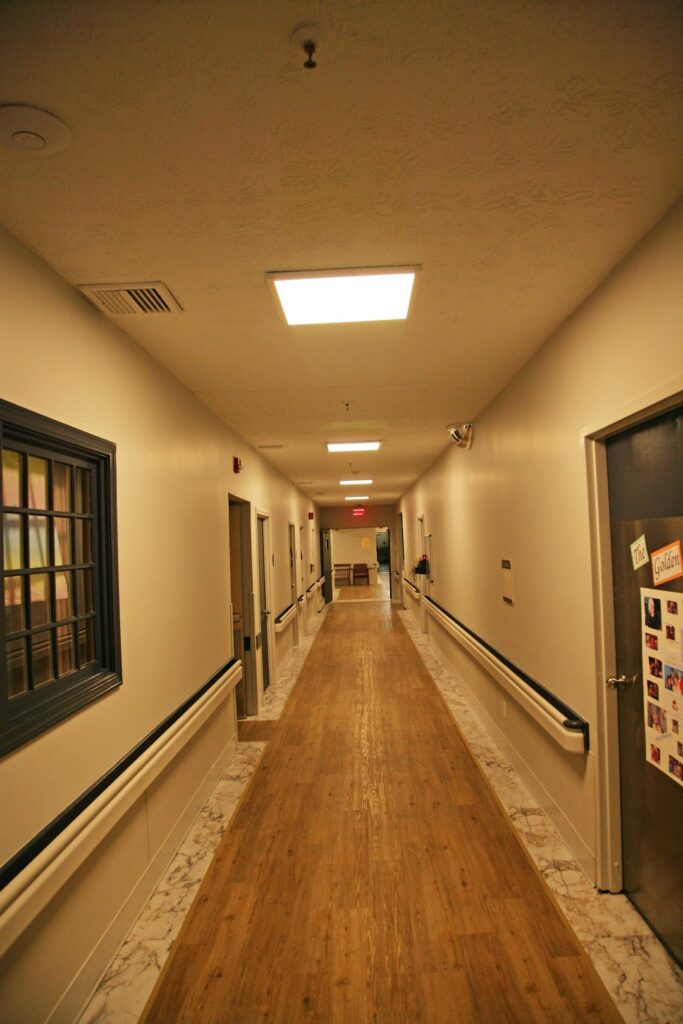
Assisted living safety involves more than locked doors and emergency call buttons. A well-designed community combines building features, trained staff, emergency procedures, medication safeguards, fall-prevention practices, and daily routines that help residents remain as independent as possible.
For households in Erie, PA, seasonal weather also deserves attention. Snow, ice, wind, power interruptions, and changing temperatures can affect transportation, walkways, heating, and emergency planning.
What safety features are required in Pennsylvania assisted living residences?
Pennsylvania assisted living residences must meet state requirements involving fire safety, emergency preparedness, staffing, resident care, building conditions, and evacuation procedures. These rules establish a minimum level of protection, but communities may differ in how those protections are implemented day to day.
Common required or expected safety elements include:
- Accessible emergency exits and unobstructed evacuation routes
- Fire detection, alarm, and suppression systems
- Emergency plans that account for each resident’s needs
- Procedures for relocation, transportation, and utility outages
- Staff training related to emergencies and resident care
- Safe storage and administration of medications
- Adequate food, drinking water, and essential supplies during emergencies
A family should view licensing as a starting point rather than a complete measure of safety. The more useful question is whether the community’s systems work reliably for the specific needs of a particular resident.
How do assisted living communities reduce fall risk?
Falls are among the most common safety concerns for older adults. Communities reduce risk through both physical design and regular observation.
Important features may include:
- Handrails in hallways and bathrooms
- Grab bars near toilets and showers
- Non-slip flooring and secure carpeting
- Adequate lighting, including night lighting
- Clearly marked changes in floor level
- Walk-in showers or appropriately designed bathing areas
- Chairs with arms and stable furniture
- Clear pathways without unnecessary cords, clutter, or loose rugs
Fall prevention also depends on routines. Staff may monitor changes in walking ability, dizziness, weakness, footwear, vision, or medication effects. A resident who was steady at move-in may need additional support later.
Families should ask how staff respond after a fall or near-fall. A strong process includes documenting what happened, checking for injury, notifying the appropriate people, and reviewing whether the care plan or environment should change.
What protections are used for memory loss or wandering?
Residents with dementia or other cognitive changes may need additional safeguards, but safety measures should be balanced with dignity and freedom of movement.
Possible features include monitored exits, secured areas, door alarms, identification systems, enclosed outdoor spaces, and staff observation. Some communities use different levels of security depending on the resident’s assessment and care plan.
A secured exit is not automatically a sign of poor care, and an unsecured setting is not automatically safer. The key issue is whether the approach matches the resident’s needs and whether staff can respond quickly if a resident becomes confused or leaves an expected area.
Families should ask:
- How are residents assessed for wandering risk?
- What happens if someone cannot be located?
- Are outdoor areas accessible and supervised?
- How does the community protect residents without unnecessarily restricting them?
- Are changes in behavior communicated to family members?
How are medications kept safe?
Medication safety involves more than locking pills in a cabinet. Residents may take several medications at different times, and errors can occur if prescriptions change, doses are missed, or instructions are unclear.
Safety practices may include locked storage, medication administration records, pharmacy coordination, identity checks, and monitoring for side effects. Staff should also have a process for documenting refusals, missed doses, medication changes, and suspected errors.
Residents and families should understand whether medications are administered by staff, self-managed under supervision, or handled through another arrangement. The answer may vary by resident and by the type of medication.
A useful question is how the community handles a new prescription after a hospital visit. A clear transition process helps prevent duplicate medications, outdated instructions, and gaps in treatment.
What fire safety features should families look for?
Fire safety is especially important in assisted living because some residents may need help walking, transferring, using stairs, or understanding evacuation instructions.
Look for:
- Smoke detectors and fire alarm systems
- Sprinkler systems where required
- Clearly marked exits
- Emergency lighting
- Fire extinguishers in appropriate locations
- Posted evacuation diagrams
- Fire-safe areas for residents who cannot quickly use stairs
- Regular fire drills and staff training

Exit routes should be easy to identify and free of furniture, equipment, boxes, or other obstructions. Residents should not have to search for an exit during an emergency.
Ask whether drills reflect actual resident needs. A plan that works for a fully mobile person may not work for someone who uses a wheelchair, needs oxygen, has hearing loss, or becomes disoriented under stress.
How does emergency planning address Erie weather?
Weather planning should account for local conditions rather than relying on a general emergency checklist. Erie commonly experiences periods of heavy snow, lake-effect squalls, freezing temperatures, ice, and strong winter weather. These conditions can affect roads, sidewalks, deliveries, outdoor mobility, and access to medical appointments.
A prepared community should have plans for:
- Heating or electrical outages
- Snow and ice removal
- Backup lighting and communication
- Medication refrigeration or other temperature-sensitive needs
- Transportation disruptions
- Emergency shelter or relocation
- Food and drinking water supplies
- Checking on residents who need extra warmth, hydration, or assistance
Families can ask how quickly walkways are treated after a storm, whether entrances remain accessible, and what happens if a resident’s usual transportation is unavailable. Winter preparedness also includes keeping coats, footwear, mobility devices, and personal emergency information ready.
What technology is used for resident safety?
Many communities use technology to support, but not replace, staff attention. Examples include emergency call systems, pull cords, wearable pendants, motion sensors, door alerts, fall-detection devices, and electronic medication records.
Technology is only useful when it is maintained, tested, and answered promptly. A call button that is out of reach, has a dead battery, or does not produce a timely response is not an effective safeguard.
Ask whether residents receive instruction on using emergency devices and whether staff test them regularly. It is also reasonable to ask what happens if the system fails during a power or network outage.
How can families evaluate safety during a visit?
A visit can reveal details that are difficult to learn from a brochure or website. Notice whether hallways are clear, floors are dry, lighting is adequate, and staff can explain emergency procedures without hesitation.
Pay attention to:
- Whether residents appear able to reach common areas safely
- How quickly staff respond to requests
- Whether bathrooms are designed for mobility needs
- Whether doors and exits are clearly marked
- How supplies and cleaning equipment are stored
- Whether residents’ personal information is handled discreetly
- Whether the environment feels calm, orderly, and appropriately supervised
Safety should support independence, not eliminate it. The most suitable setting is one where protections are visible, routines are dependable, and care practices can change as a resident’s needs change.
