
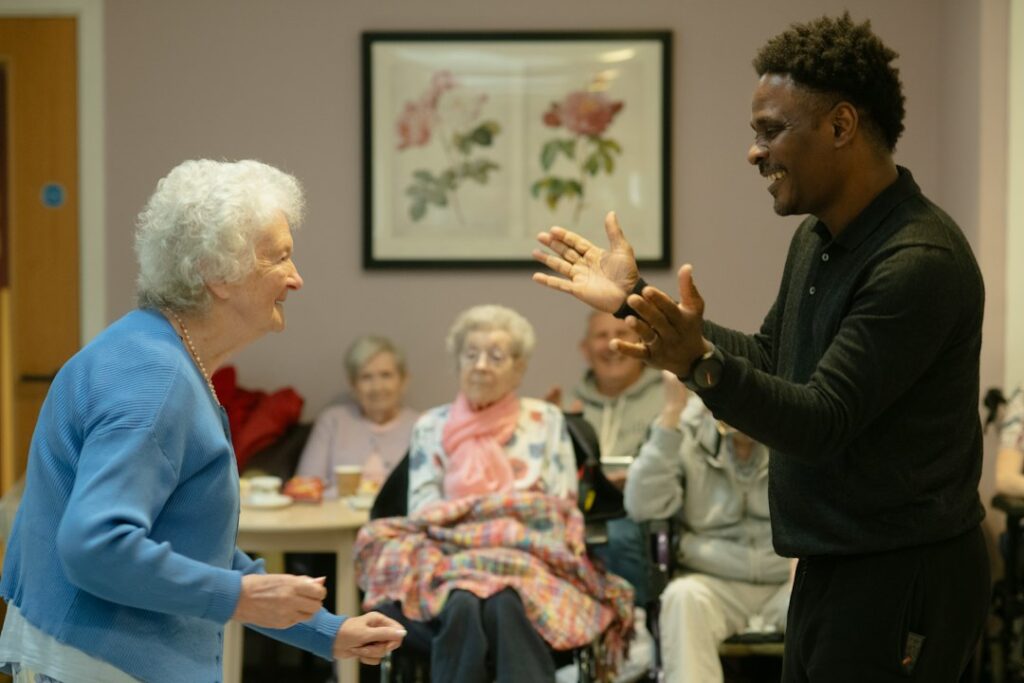
Moving into assisted living can change how families spend time together, but it does not have to weaken relationships. Regular visits, familiar routines, thoughtful communication, and shared activities can help residents remain connected with spouses, children, grandchildren, friends, and neighbors.
How can families stay connected after a loved one moves into assisted living?
The most reliable approach is to create a predictable pattern of contact rather than depending only on occasional visits. A short phone call on a familiar day, a weekly visit, or a regular video conversation can provide reassurance and something for the resident to look forward to.
Family members should ask the resident what type of contact feels most comfortable. Some people enjoy frequent visits, while others prefer shorter visits with more rest between them. Preferences may also change as health, energy, hearing, vision, or memory changes.
Useful ways to maintain regular contact include:
- Visiting at a consistent time when possible
- Calling before lunch or dinner if that fits the resident’s routine
- Sending handwritten notes, printed photographs, or children’s drawings
- Sharing a simple calendar showing upcoming visits and family events
- Including the resident in ordinary household decisions and conversations
- Asking about the resident’s day instead of focusing only on medical concerns
Consistency matters more than making every interaction elaborate.
What makes an assisted living visit meaningful?
Meaningful visits usually involve a shared activity, not just sitting across from each other and asking, “How are you?” Activities should match the resident’s interests, abilities, and energy level.
A visit might include looking through a family photo album, listening to familiar music, folding laundry together, watching a favorite program, reading aloud, or taking a brief walk if the setting and weather allow. A grandchild might bring homework to complete nearby, while another family member may prefer a quiet conversation over tea.
Visits do not need to last for hours. A focused 30-minute visit may be more enjoyable than a longer visit that leaves the resident tired or overwhelmed. Watch for signs such as reduced attention, irritability, drowsiness, or repeated requests to rest. Ending on a positive note can make the next visit easier.
During colder months, wind, ice, and lake-effect snow can make travel more difficult for households in Erie, PA. Families may need to plan shorter visits, allow extra travel time, or use phone and video contact when roads are unsafe. A missed visit should be followed by a clear explanation and another planned point of contact.
How can families communicate with someone who has hearing or vision loss?
Communication is easier when the environment supports the resident’s senses. Sit facing the person, reduce background noise, and speak clearly at a natural pace. Shouting can make speech harder to understand and may feel uncomfortable or disrespectful.
Helpful habits include:
- Getting the resident’s attention before speaking
- Using short, complete sentences
- Allowing extra time for a response
- Rephrasing instead of repeating the same unclear words
- Confirming important details in writing or with a calendar
- Making sure glasses, hearing devices, and other aids are available and working
- Choosing a well-lit area for conversation
For video calls, a larger screen may be easier to see than a small phone. Family members should test the device ahead of time and keep the conversation simple. If technology causes frustration, a regular telephone call or printed letter may be more effective.
What if a loved one has memory loss or dementia?
Connection remains possible even when a resident cannot remember names, dates, or recent visits. Familiar feelings, voices, music, and routines may remain meaningful even when conversation becomes difficult.
Family members can focus on the present moment rather than testing memory. Questions such as “Do you remember who I am?” may create anxiety. More supportive conversation might include, “I’m glad to sit with you,” or “This song reminds me of family gatherings.”
Helpful approaches include:
- Using the resident’s preferred name
- Introducing yourself calmly when needed
- Talking about familiar people, places, foods, or traditions
- Looking at labeled photographs
- Singing or listening to well-known music
- Avoiding arguments about mistaken memories
- Redirecting gently when a topic causes distress

A person with memory loss may enjoy the visit even if the visit is forgotten later. The emotional experience can still be valuable.
How can distant family members participate?
Relatives who cannot visit regularly can remain involved through planned, manageable contact. Long-distance family members might arrange a weekly call, send a short audio message, or mail photographs with names and dates written on the back.
Children and grandchildren can participate in age-appropriate ways by drawing pictures, recording a greeting, sharing school news, or asking the resident to tell a story. These exchanges help the resident remain part of family life rather than feeling separated from it.
Families should avoid creating a schedule that depends on one person remembering every detail. A shared family calendar can show who is calling, who is visiting, and which events are coming up. This can prevent repeated calls from some relatives while others unintentionally lose contact.
Can residents stay involved in family celebrations and traditions?
Yes. Participation may need to be adapted, but a resident can often remain involved in birthdays, holidays, religious observances, reunions, and other traditions.
If attending a large gathering is tiring, family members might bring a small celebration to the resident, arrange a quieter visit before the main event, or include the resident through a video call. Favorite foods, music, decorations, recipes, and stories can help preserve familiar traditions.
Large gatherings may be challenging because of noise, crowds, unfamiliar surroundings, and long periods without rest. A shorter visit with a quiet place to take a break may be more comfortable than attending an entire event.
Families should also remember that celebrations can bring mixed emotions. A resident may feel happy to see relatives but sad about changes in health, housing, or family roles. Listening without immediately trying to correct or cheer away those feelings can make the interaction more supportive.
How can staff and family members work together?
Families should share useful information about the resident’s interests, routines, communication preferences, and meaningful relationships. Staff may be able to help identify the best time for a visit, explain activity schedules, or suggest approaches when a resident seems withdrawn.
Communication should remain respectful and focused on the resident’s well-being. Family members can ask practical questions such as:
- What time of day does the resident usually have the most energy?
- Are there activities the resident especially enjoys?
- Does the resident seem more comfortable with small groups or one-on-one visits?
- Have staff noticed changes in mood, sleep, appetite, or communication?
- What helps the resident settle after a difficult day?
A resident should remain part of these discussions whenever possible. Family involvement is strongest when it supports the resident’s preferences rather than replacing the resident’s voice.
What should families do when visits become difficult?
Difficult visits are common and do not necessarily mean the relationship is failing. A resident may be tired, in pain, confused, anxious, or frustrated by a change in routine. Family members may also feel sadness, guilt, or uncertainty about what to say.
Try changing one factor at a time. Visit at a different time, choose a quieter space, shorten the visit, bring a familiar activity, or replace open-ended questions with simple observations. If a sudden change in mood or communication continues, share the concern with the appropriate care staff.
Connection does not require perfect conversations or frequent entertainment. A calm presence, a familiar voice, a photograph, or a dependable visit can help a resident feel remembered and included in family life.
